
Inclusivity at a SINGLZ event refers to the deliberate removal of unnecessary barriers to participation. At SINGLZ, this means the event is accessible to adults of varying ages, genders, and backgrounds without applying selective criteria beyond one clearly defined eligibility condition. The format a standard club night with a DJ, music, and a social atmosphere is chosen specifically because it does not require participants to perform, follow structured interactions, or meet any social threshold to engage. The environment is intended to reflect the conditions of a naturally occurring social setting, rather than a curated or filtered one.
The single-status requirement is the structural foundation of the event, not a restriction in the conventional sense. Its function is to establish a shared social context among all attendees. No verification mechanism exists for this condition, but it is clearly communicated prior to purchase and is understood as the core agreement between the event organiser and the participant. Beyond this, no criteria are applied based on gender identity, relationship history, nationality, or appearance.
Adults aged 18 and above who are currently single and comfortable in a club-style social environment. The event accommodates three broad age groups 18–30, 30–45, and 45+ all present within the same venue simultaneously.
Individuals who are not single, as this conflicts with the core condition of attendance. The format is also not suited to those who expect a structured or facilitated meeting process, as no such system exists at SINGLZ events.
There are no restrictions based on gender, sexual orientation, or cultural background. Attendance is open across these dimensions, and no quota is applied per demographic group beyond the age-and-gender monitoring used to guide overall event balance.
SINGLZ events operate without any scheduled interaction rounds, algorithmic matching, or assigned pairings. Attendance does not create an obligation to speak with any specific person or group. Participants move through the evening at their own discretion, engaging only when and with whom they choose. This structure is intentional: it removes the performance dynamic common to speed-dating or structured matchmaking formats.
The use of a standard club night format with music, dancing, and informal socialising means that no single mode of interaction is prioritised. Participants may choose to dance, stand at the bar, or engage in conversation. The absence of a structured programme distributes social agency equally across all attendees, regardless of personality type or social confidence.
Events typically run from approximately 17:00 to 01:00. Attendees are free to arrive and move through the venue without restriction. There is no registration desk interaction, assigned seating, or timed segment that would require participants to be present in a specific place at a specific time.
Ticket sales are monitored across three age categories (18–30, 30–45, and 45+) and by gender to assess the overall composition of each event. This monitoring is used as an informational tool to guide event management decisions where necessary. It does not function as a gatekeeping mechanism and does not result in ticket refusals based on demographic profile. The goal is to avoid significant imbalances in attendance that would alter the social dynamic of the evening, while keeping access as open as the format allows.
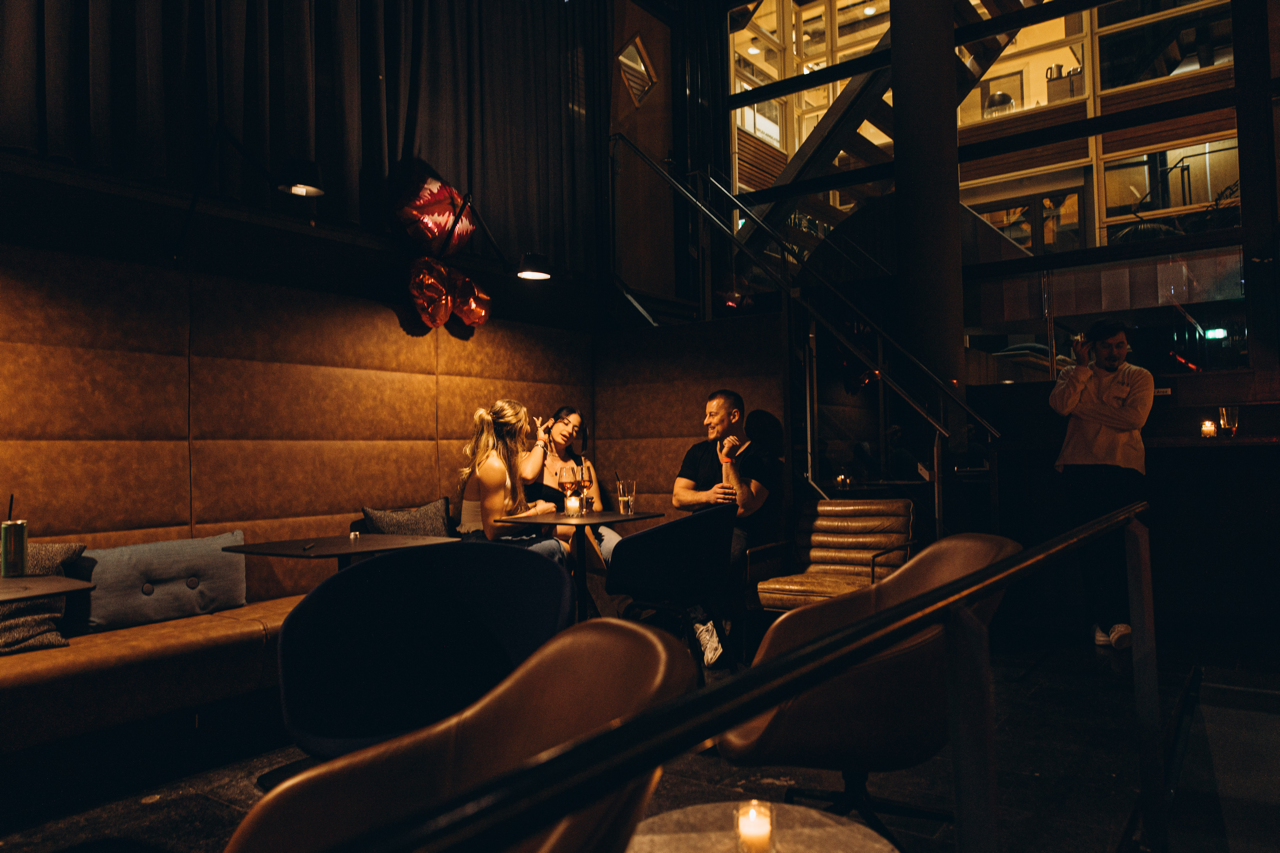
That's a valid option there's no requirement to interact. The format is a club night, not a workshop, so you're free to enjoy the music and engage only if something feels natural. Most people find that the shared context lowers the barrier slightly, but nothing is expected of you. Coming as you are is entirely acceptable.
Pricing is tiered across three levels:
The €10 gap between earliest and latest is meaningful for a single night out. Early bird availability is limited and sells first, so if you're already planning to attend, purchasing early is the straightforward financial choice.
Two reporting channels are available throughout the evening:
Response depends on the nature and severity of the situation, assessed case-by-case. Having dual channels means you're not relying on a single point of contact if one is occupied or unavailable.
