
OUR ETIQUETTE POLICY

SINGLZ events etiquette: how to connect genuinely at a SINGLZ night.

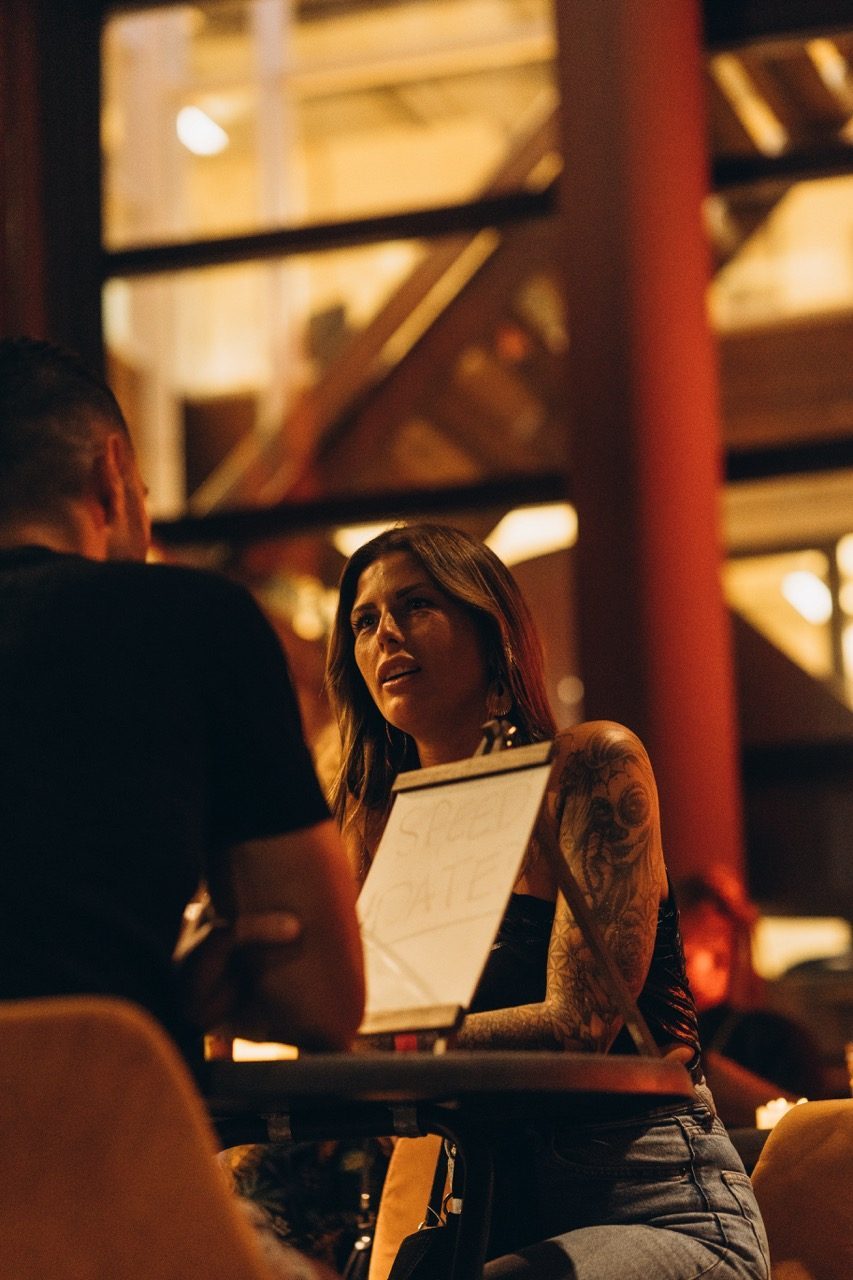
Singlz events are structured as open club nights attended exclusively by single people. There are no rounds, no assignments, and no facilitated introductions. How each attendee navigates the evening how they approach others, interpret social signals, exchange contact details, and handle boundaries is entirely self-directed. This page outlines the behavioural standards and social norms relevant to attending a SINGLZ event, covering what the event format requires, what it does not, and how to engage with other attendees in a manner that is appropriate to the environment.

SINGLZ events etiquette: how to connect genuinely at a SINGLZ night

SINGLZ events are structured as open club nights attended exclusively by single people. There are no rounds, no assignments, and no facilitated introductions. How each attendee navigates the evening how they approach others, interpret social signals, exchange contact details, and handle boundaries — is entirely self-directed. This page outlines the behavioural standards and social norms relevant to attending a Singlz event, covering what the event format requires, what it does not, and how to engage with other attendees in a manner that is appropriate to the environment.

Why etiquette at a SINGLZ night works differently than regular socialising

A SINGLZ event operates under a shared social contract that does not exist in standard nightlife settings. Every attendee has chosen to be present with the explicit understanding that others are open to connection. This changes the baseline assumptions around conversation, approach, and intent. Because the environment is more socially transparent than a typical night out, the behavioural standards shift accordingly interactions carry more weight, misreads are more consequential, and the responsibility to read and respect signals becomes more pronounced than in casual mixed-purpose settings.

How to approach, start, and exit conversations without awkwardness

There is no formal structure to a SINGLZ event no rounds, no assigned interactions, and no obligations. This means that how conversations begin, develop, and end is entirely self-directed. The absence of a structured format places full responsibility on attendees to initiate and manage interactions at their own discretion and pace.


  • 1
    Approach with a neutral opener
    Begin with a low-pressure observation or situational comment rather than a direct expression of interest. This gives the other person space to engage or disengage without social friction.
  • 2
    Establish a natural conversational rhythm
    Allow the conversation to develop reciprocally. Monitor whether the other person is contributing actively or responding minimally both are informative signals.
  • 3
    Gauge investment before escalating
    Before moving a conversation toward more personal territory, ensure there is consistent two-way engagement. Unilateral escalation without reciprocal cues is a common source of discomfort.
  • 4
    Exit cleanly when appropriate
    A polite, direct exit such as stating you are going to get a drink or check in with someone is preferable to letting a conversation taper into awkward silence. A clear close is socially neutral and does not require extended justification.

Recognising genuine interest vs. polite disinterest

Signal type Indicators of engagement Indicators of disinterest
Verbal Asks follow-up questions, introduces new topics, shares personal detail unprompted Gives brief or closed answers, does not reciprocate questions
Physical Maintains open body orientation, sustained eye contact, faces toward you Body angled away, frequent scanning of the room, limited eye contact
Temporal Allows the conversation to extend naturally, does not introduce exit cues References needing to find friends, glances at phone, creates physical distance

Exchanging contact details, timing, tone, and handling rejection graciously

  • Timing
    Request contact details only after a sustained, reciprocal conversation not at the opening of an interaction. Early requests carry a higher risk of misreading the social context.
  • Tone
    Frame the request as an option, not an expectation. A low-stakes phrasing such as offering your own contact first reduces pressure on the other person to respond in a particular way.
  • Handling a decline
    A refusal is a complete answer and does not require negotiation, re-framing, or follow-up attempts. Acknowledging it briefly and moving on is the standard expected of all attendees.
  • After an exchange
    If contact details are shared, avoid sending multiple messages before receiving a response. Continued interaction outside the event is subject to the same standards of consent and reciprocity.

Respecting boundaries and what the event's core rules actually require

The only enforced eligibility requirement is that all attendees must be single. This is communicated explicitly during the ticket purchase process and constitutes the foundational premise of the event. It is not a guideline it is the condition under which the event operates. Attendees who are not single compromise the social contract that makes the environment function for others.

No attendee is obligated to interact with anyone they do not wish to engage with. Persistent contact after a clear signal of disinterest, physical contact without consent, and behaviour that causes another person to feel unsafe or uncomfortable are all considered violations of the event's standards. These are not edge cases they are central to how the event maintains its social environment.

Social norms at a SINGLZ event permit open conversation, direct expressions of interest, and the exchange of contact details where both parties are comfortable. Personal boundaries exist within that framework and are determined by each individual. The presence of a socially open atmosphere does not override individual preferences or consent. The two operate in parallel and are not in conflict.

How to report discomfort to the event team or venue security

  • 1
    Identify the appropriate contact
    Members of the SINGLZ event team are present throughout the evening and are the first point of contact for any concern. Venue security staff are also available and are authorised to respond to escalated situations.
  • 2
    Report as early as possible
    Early reporting allows the team to intervene before a situation escalates. There is no threshold of severity required before a report is appropriate if an attendee feels uncomfortable, reporting is a valid and supported action.
  • 3
    Provide a factual account
    When reporting, describe what occurred, where it happened, and who was involved as specifically as possible. The team will review the situation and determine the appropriate response.
  • 4
    Expect a proportionate response
    All reports are handled by the event team and venue security in line with the event's standards. The outcome will be proportionate to the nature of the reported behaviour.

Navigating a mixed-age, mixed-background crowd respectfully

Age Diversity

SINGLZ events are attended by people across three age bands: 18–30, 30–45, and 45 and above. All groups share the same venue. Interactions across age groups are entirely normal within the event's format, provided they follow the same standards of consent and mutual engagement that apply to all interactions.

Background and context

Attendees come from varied personal, cultural, and social backgrounds. Communication styles, comfort levels with direct approaches, and expectations around personal space differ meaningfully between individuals. Treating each interaction as contextually independent reduces the risk of applying generalised assumptions to individual people.

Social dynamics in a shared space

In a venue where multiple demographic groups are present simultaneously, the pace and nature of social interaction will vary across different areas and points in the evening. Adjusting your approach based on the immediate context rather than applying a fixed social strategy tends to result in more appropriate and effective interactions.

The one mindset shift that makes the evening work for you

The most functional orientation toward a SINGLZ event is to treat it as a social evening first and a meeting opportunity second. Attendees who arrive with a fixed outcome in mind making a specific number of connections, meeting a particular type of person, or leaving with contact details tend to apply social pressure that others can sense and that disrupts natural interaction. The event's format is designed around the premise that organic connection is more likely when the social environment is relaxed. Approaching the evening without a transactional framework and allowing conversations to develop or conclude on their own terms is consistent with both the event's design and with broadly recognised principles of effective social engagement.

FAQ

Many attendees arrive with the same concern. The environment is designed so everyone present understands that meeting new people is the purpose of the night, which lowers the usual social barriers. You are not required to approach large groups or maintain long conversations. Brief interactions, casual observations about the event, or even short exchanges at the bar are typical ways people ease into the evening at their own pace.

A simple, direct exit is generally the most comfortable option for both people. You can acknowledge the conversation and close it naturally, for example by saying you’re going to grab a drink or say hello to someone you spotted earlier. Clear but neutral exits are normal in this environment. Most attendees understand that people circulate during the evening, so brief conversations ending naturally are expected.

Low-pressure openings work best. Rather than immediately expressing interest, start with a situational comment about the event, the venue, or the atmosphere. This creates space for the other person to respond naturally. Pay attention to whether they ask questions back or expand the conversation. If responses stay brief or distracted, it usually means it’s best to politely wrap up the interaction and move on.

Yes, declining directly is socially acceptable and common. A brief, polite response such as saying you’d prefer not to exchange details is enough. You don’t need to justify the decision or create a long explanation. In this setting, people understand that interest may not be mutual. Respectful communication works both ways, and most attendees expect that not every interaction will lead to contact exchange.

Most conversations at singles events are intentionally light at first. The goal is simply to explore whether there is enough comfort to continue talking. Many interactions remain friendly but brief, and that is completely normal. Strong chemistry is not required for a positive experience. Treating conversations as social introductions rather than high-stakes encounters tends to create more relaxed and natural interactions.

If someone continues approaching after you have signaled disinterest, you are not required to manage the situation alone. You can speak to the event team or venue staff and explain what is happening. They are responsible for maintaining a respectful environment and can intervene if necessary. Reporting early is encouraged because it allows the team to address the issue before it escalates further.

Age diversity is common at these events, and interactions across age ranges are generally normal. People attend with different expectations and life experiences, so conversations often vary in tone and pace. The key factor is mutual comfort rather than age similarity. If both people engage naturally and respectfully, the interaction usually feels straightforward regardless of the age difference between attendees.

There is no strict timing rule, but moderation is important. A short message later that evening or the next day is common because it reminds the other person who you are. What matters more is tone rather than speed. Keep the message simple and conversational, and allow space for a reply rather than sending multiple messages if a response does not arrive immediately.

Many attendees arrive on their own. Because everyone present shares the same general purpose, starting conversations with unfamiliar people is socially expected rather than unusual. Coming alone often makes it easier to move between conversations naturally, since you are not anchored to a group. Some people attend with friends, but individual attendees are a very common part of the event environment.

Not necessarily. Singles events involve many brief interactions, and outcomes vary from one evening to another. A successful experience often means having a few enjoyable conversations and becoming comfortable navigating the environment. Meeting someone you want to continue seeing is only one possible outcome. Approaching the event as a relaxed social evening usually leads to a better overall experience than focusing solely on results.
At Singlz, it’s not just about dating, t’s about discovering, enjoying, and connecting.
SIGN UP
Subscription Form
Contact