The way people meet has changed significantly over the past decade, but not all methods operate on the same principles or serve the same social needs. Dating apps and SINGLZ events represent two structurally different approaches to social connection each with distinct mechanics, contexts, and trade-offs. Understanding how they differ in practice helps clarify which approach aligns with what a person is actually looking for, rather than defaulting to what is most familiar or most advertised.

The context in which two people meet shapes the dynamics of that interaction from the start. Meeting someone through a screen-based interface introduces a different set of social cues, expectations, and filters than meeting in a shared physical environment. Neither approach is inherently superior, but the conditions each creates in terms of first impressions, communication style, and social pressure are meaningfully different. For anyone considering their options, the method of meeting is not a minor logistical detail; it influences the nature of the interaction itself.
Both formats are built around a common premise: creating an environment where single people can encounter others who are also open to meeting someone. Both require intentional participation you have to show up, engage, and initiate.
The channel, pace, and social context differ substantially. Apps operate asynchronously through profiles and text-based messaging. SINGLZ events operate in real time, in a shared physical space, through direct face-to-face interaction.
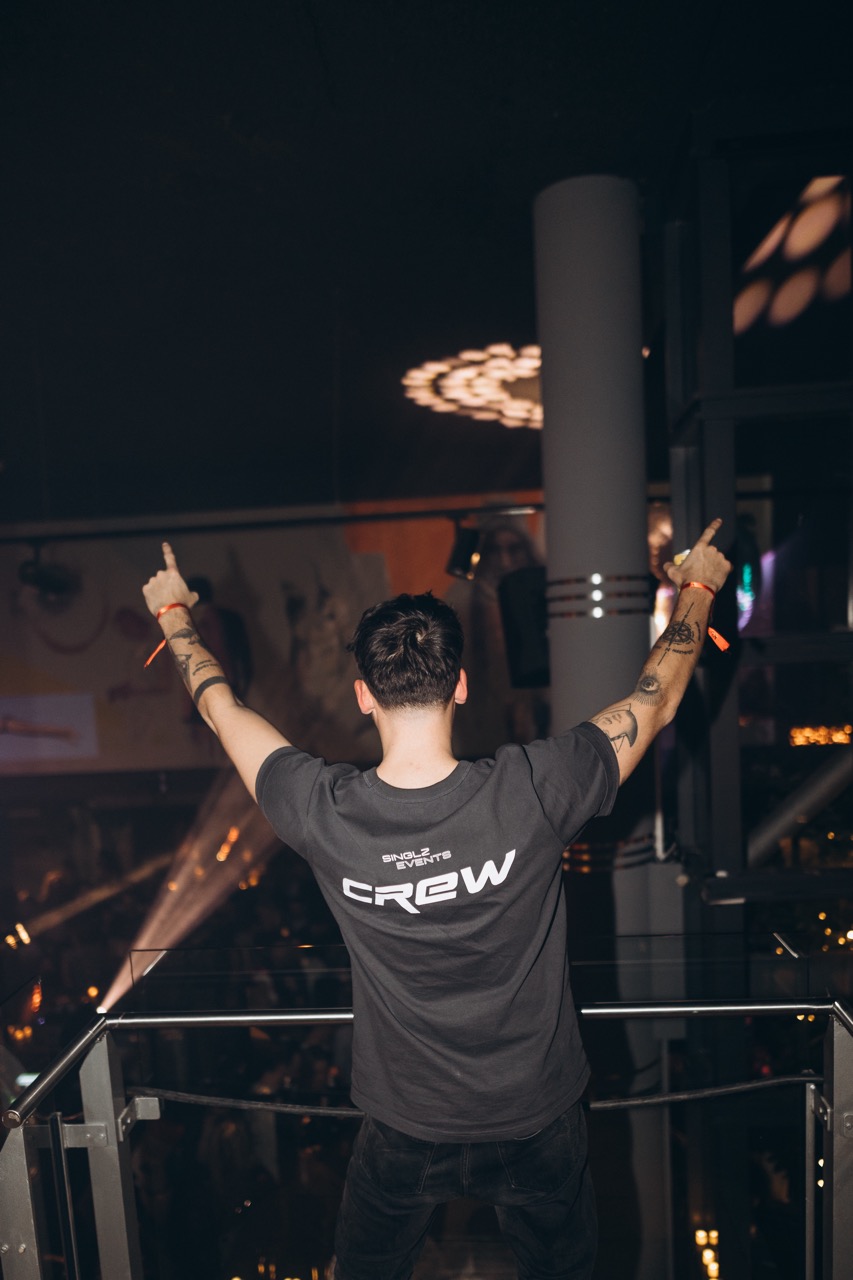
A SINGLZ night functions as a structured social setting where all attendees share a known common denominator: they are single and present by choice. The event itself, music, a venue, drinks, movement through a space provides a natural social backdrop that removes the need to manufacture reasons for conversation. Interaction happens organically, driven by proximity, atmosphere, and shared context rather than profile matching or pre-screening.
Apps present users as curated profiles, photos, a short description, and selected personal details. Initial evaluation is based entirely on this static representation, before any real interaction occurs. The profile functions as a filter that determines whether contact is even initiated.
Communication begins through text-based chat within the platform. This format allows for considered responses but removes the spontaneity and social feedback of live conversation. The gap between digital interaction and in-person meeting can be significant.
Most apps use preference filters and behavioural data to surface potential matches. This introduces selection bias people are only shown what the algorithm determines is relevant, rather than encountering a broader social cross-section.
Apps allow access to a large number of profiles across time and geography. This accessibility is often cited as an advantage, though it also introduces a browsing dynamic that can reduce the perceived weight of any individual interaction.
Text-based communication cannot replicate the information conveyed through tone, timing, and physical presence. Decisions made from profiles and messages are inherently incomplete.
When a match progresses to an actual meeting, people often encounter a dynamic quite different from their text-based exchanges requiring a second adjustment that doesn't exist when connection forms in person.
Access to a large number of profiles can create a passive browsing pattern. When options feel abundant, investment in any single interaction decreases.
Visibility, reach, and communication are subject to the platform's design, algorithms, and commercial priorities independent of a user's actual social intent.
Apps provide no shared experience around which a connection can form. App based interaction begins with no shared context other than the platform itself.
Profiles reward certain presentation styles and disadvantage those who communicate better in conversation than in written self-description.
Those who express themselves more naturally in conversation than in written profiles find the in-person format more aligned with how they actually connect.
People who have spent extended periods on dating apps without meaningful progress often find that a change of format not just platform shifts the dynamic.
A club night suits those at ease in moderately busy, ambient social settings. It doesn't require extroversion, but a baseline comfort with unstructured social interaction is relevant.
The format imposes no requirements to interact with specific people or stay for a set duration. Engage on your own terms without structured rounds.
For some, a connection formed around a shared real-time experience carries more weight than one initiated through a profile. The event provides that shared context by default.
A SINGLZ event provides a socially defined setting everyone present has the same status and intent which lowers the ambiguity of re-entering the dating context.
A SINGLZ event is a social setting, not a structured matching process. Attending with the expectation of guaranteed connection or a predetermined outcome is not aligned with how the format operates. The event creates conditions for interaction; what develops from that depends on the people involved and the conversations that take place. Approaching the evening with openness to general social engagement rather than a narrow outcome in mind is more consistent with how meaningful interactions tend to develop in this kind of environment.
In-person interaction operates on a significantly broader set of social signals than digital communication. Tone of voice, physical presence, timing of responses, and non-verbal cues all contribute to how people assess one another in real time. These signals are not available through profile-based interaction, which means first impressions formed in person carry a different informational weight.
Active monitoring of ticket sales across age groups and genders maintains a reasonably balanced mix. The three age brackets, 18–30, 30–45, and 45+ are present in the same space, meaning cross-age interaction is possible without being engineered. A balanced environment reduces the social pressure that can arise when proportions are heavily uneven.
The shared understanding that everyone present is single and has chosen to attend changes the social baseline. It reduces the specific uncertainty around receptiveness that often prevents interaction from beginning in general social settings.
The physical structure of an event different areas, a bar, a dancefloor, quieter corners allows social interaction at varying levels of intensity. Conversations start and end naturally, with no fixed obligation to remain in any one interaction. This fluidity is structurally different from a digital interface where conversations are logged and persistent.
In-person interaction operates on a significantly broader set of social signals than digital communication. Tone of voice, physical presence, timing of responses, and non-verbal cues all contribute to how people assess one another in real time. The venue atmosphere, music, lighting, ambient social energy also contributes to how comfortable people feel engaging with strangers, in ways that a neutral digital interface does not replicate.
The composition of attendees at a SINGLZ event is not incidental. Active monitoring of ticket sales across age groups and genders maintains a reasonably balanced mix across the evening. A balanced environment reduces the social pressure that can arise when proportions are heavily uneven. The three age brackets, 18–30, 30–45, and 45+ are present in the same space, which means cross-age interaction is possible without being structured or enforced.
| Factor | SINGLZ Event | Dating App |
|---|---|---|
| Format | In-person, real-time social evening | Asynchronous, screen-based interaction |
| Time commitment | One defined evening (approx. 5 PM – 1 AM) | Ongoing, self-managed across days or weeks |
| Cost structure | Single ticket purchase (€15–€25) | Recurring subscription or in-app purchases |
| Interaction style | Face-to-face, unscripted, social | Text-based, profile-led, filtered |
| Control over who you meet | Determined by attendance and personal initiative | Shaped by algorithm, filters, and mutual matching |
| Follow-up mechanism | No platform support; exchange happens directly | In-app messaging until contact details are shared |
| Social pressure | Present but diffused by ambient setting | Low initially; can increase before meeting |
| Outcome dependency | Requires comfort with in-person social engagement | Requires effective written self-presentation |
The fundamental ambiguity of everyday social interaction is removed by design. Every attendee has purchased a ticket knowing the premise of the evening.
The event does not rely on algorithms, compatibility scores, or profile filters. Given the right environment, people are capable of determining their own interest.
Purchasing a ticket and showing up is itself a form of social commitment that differs from the low-friction entry of downloading an app.
Age group and gender balance are actively monitored across ticket sales treating the social composition of the room as a variable worth managing.
The event operates with a clear behavioural baseline: respectful conduct and the right to disengage at any point.
Because the event functions as a normal club night, it supports connection without imposing it the evening works regardless of whether a specific connection is made.
