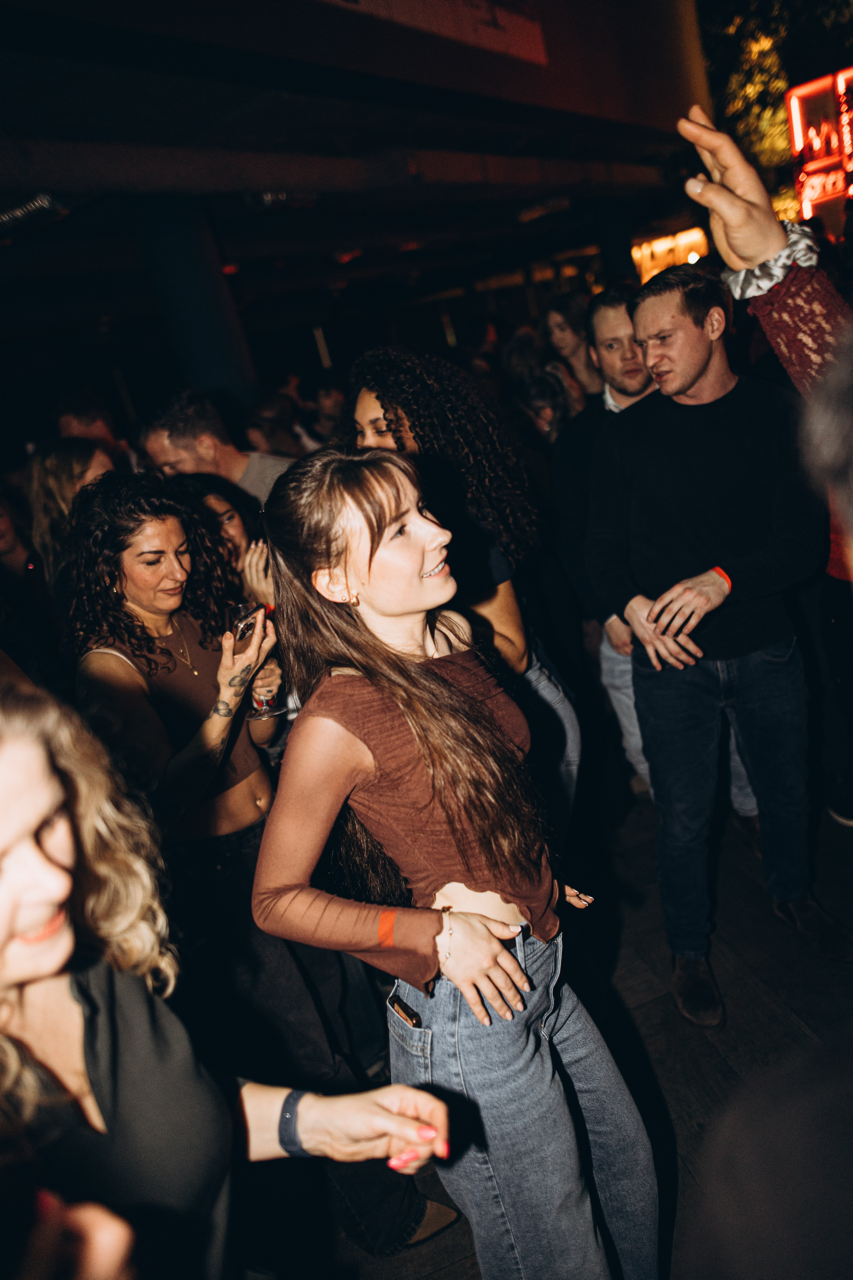

At a standard social event, the majority of attendees may be partnered, attending with a group, or not open to new connections at all. This creates an unspoken layer of ambiguity that shapes how people approach one another. At a dedicated singles event, that ambiguity is largely removed. Every attendee has chosen to be there under the same premise that they are single and open to meeting people. This shared condition changes the conversational baseline before a single word is exchanged.
In most social environments, approaching someone involves an implicit question: are they available and interested in talking? At a SINGLZ event, the first part of that question availability is already answered by the nature of the event itself. This does not guarantee interest or compatibility, but it does reduce the interpretive burden that typically comes with initiating contact. Attendees can assume a general openness without needing to read signals that belong to a different social context entirely.
There are no assigned partners, fixed rounds, or structured rotations. Conversation happens at whatever pace feels natural, without time pressure or obligation to speak to a set number of people.
Unlike professional networking, there is no transactional objective. The goal is social connection in a relaxed environment, which changes what topics, tones, and pacing are appropriate.
While the format resembles a club night music, drinks, open venue the shared awareness that everyone is single shifts the social contract. People are generally more approachable and less likely to interpret an introduction as intrusive.
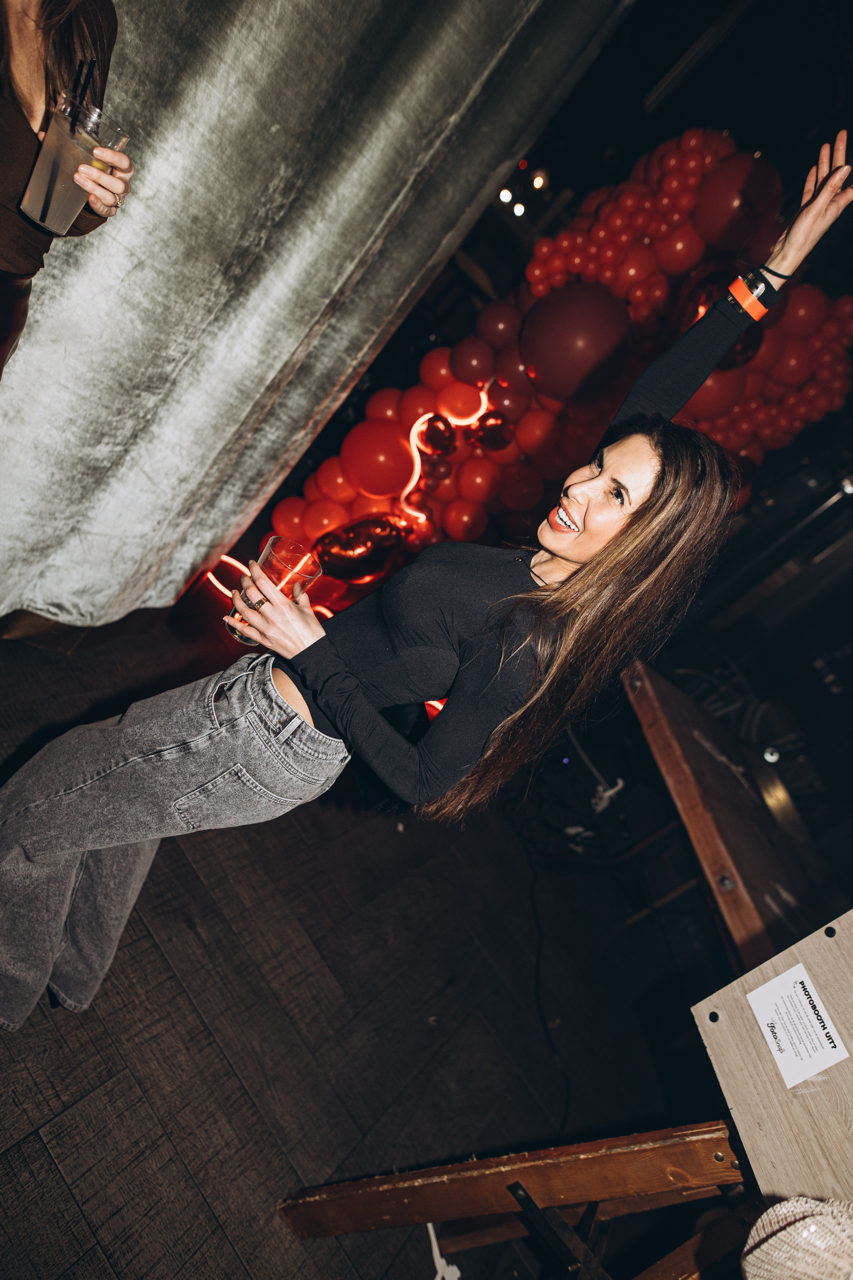
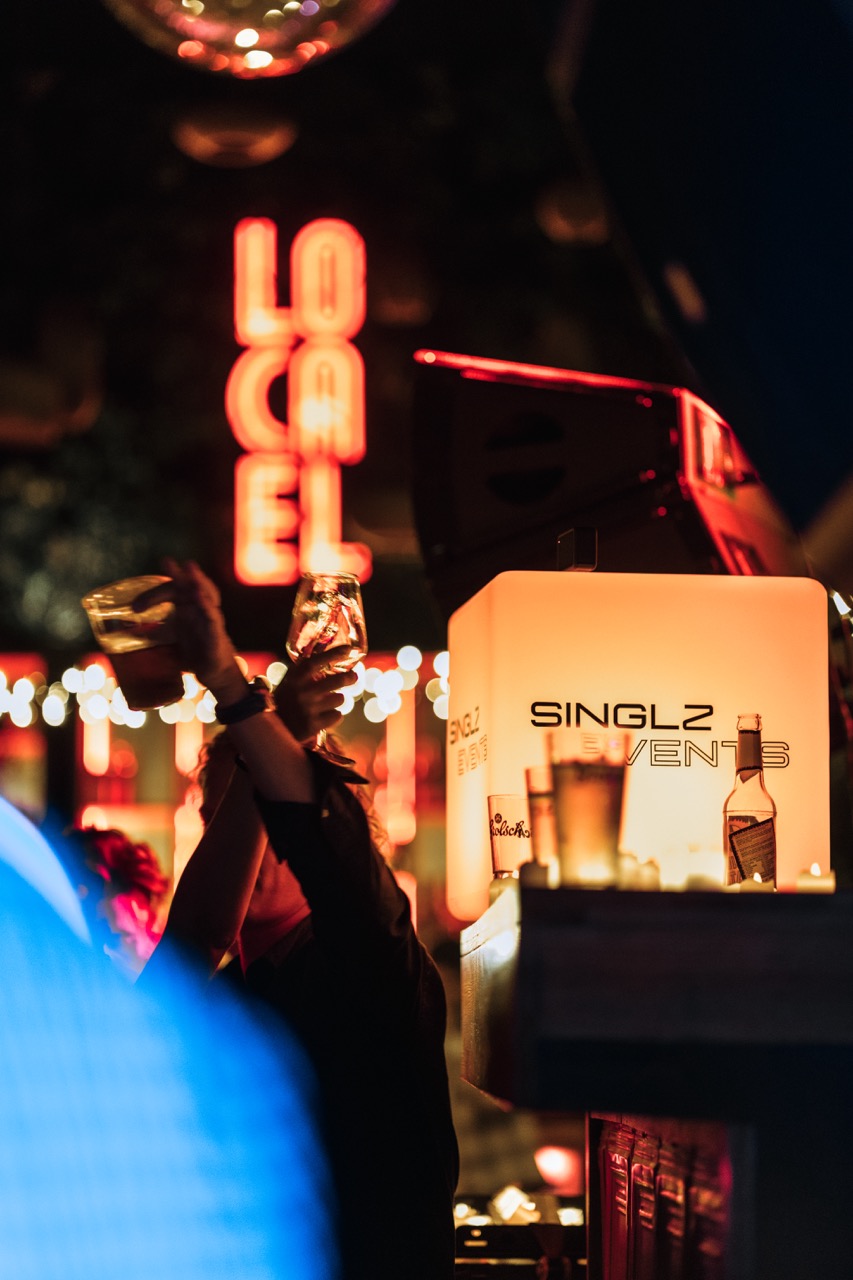
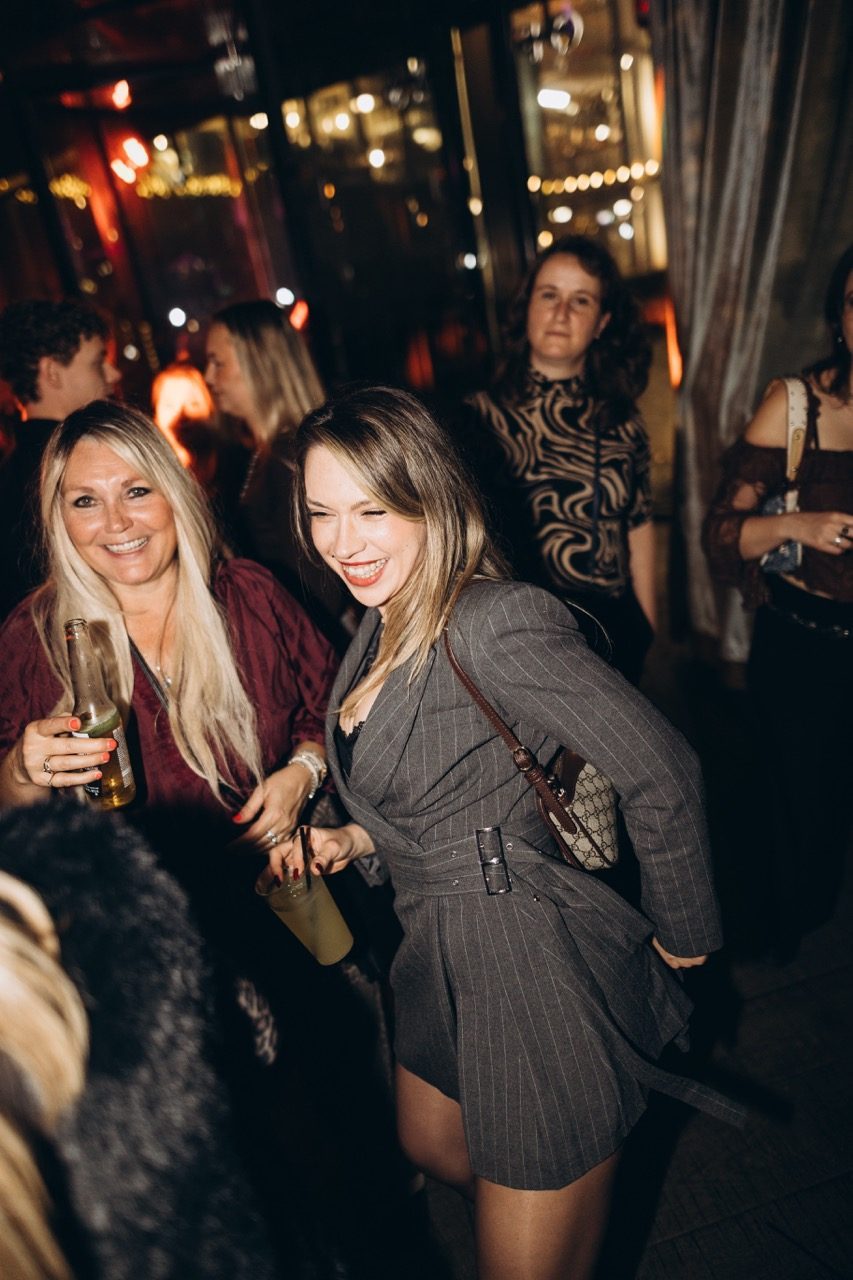
The barrier to starting a conversation at a SINGLZ event is lower than in most other settings, but the mechanics of a good opening still apply. What works is not a prepared script it is a low-pressure, situational remark that invites a response without demanding one. The most effective openings are brief, contextually grounded, and neutral in tone.
Closed-off body language crossed arms, sustained eye contact with a phone, body angled away from the room typically signals that someone is not in a conversational moment. Open posture, eye contact with the space, or standing near common areas generally indicates more receptiveness.
Someone standing alone or on the edge of a group is often easier to approach than someone in the middle of an active group conversation. Interrupting a group dynamic requires more social effort and carries a higher risk of poor timing.
The social temperature at an event tends to warm over time. In the early stages of the evening, people are still settling in and groups are not yet formed. This can be an easier window for initial contact than later in the night when social clusters become more established.
Sustaining a conversation depends less on having interesting things to say and more on asking questions that give the other person room to share. The most productive exchanges involve both parties contributing roughly equally. One-sided exchanges where one person talks at length and the other responds minimally tend not to sustain themselves naturally.
A conversation that has run its course is not a failure. Stretching silences, shorter responses, or a shift in body orientation often signal a natural pause appropriate moments to close the exchange.
Neutral, low-pressure closings "It was good to meet you", "I'll let you get back to your evening" are socially clear without requiring justification, ending the interaction without implying disinterest.
Ending one conversation does not preclude returning to the same person later if the opportunity arises naturally. A brief earlier exchange can make a second conversation easier than a first approach from scratch.
Attending a SINGLZ event after a period of not socialising in this way, or for the first time, involves a degree of social adjustment that is entirely normal. The environment is designed to be open and low-stakes, but that does not eliminate apprehension. Nervousness in social situations is a response to uncertainty not a signal that something is wrong. Understanding what to realistically expect can reduce the cognitive load that contributes to that uncertainty.
There are no obligations at a SINGLZ event. Attendees are free to move at their own pace, step back when needed, and engage only with people they feel comfortable approaching. The event has no quota or structured participation requirement.
A SINGLZ event is a social environment, not a matching algorithm. Some conversations will be brief and go nowhere. That is a normal part of the format not an indicator of how the evening as a whole will go.
The first hour of any social event typically involves a settling-in period for most attendees. Social confidence in the room generally builds over time. Arriving with that expectation reduces pressure on the early part of the evening.
Internal experience of anxiety is rarely as apparent to others as it feels to the person experiencing it. People are generally focused on their own social experience, which limits how much attention they pay to the behaviour of those around them.
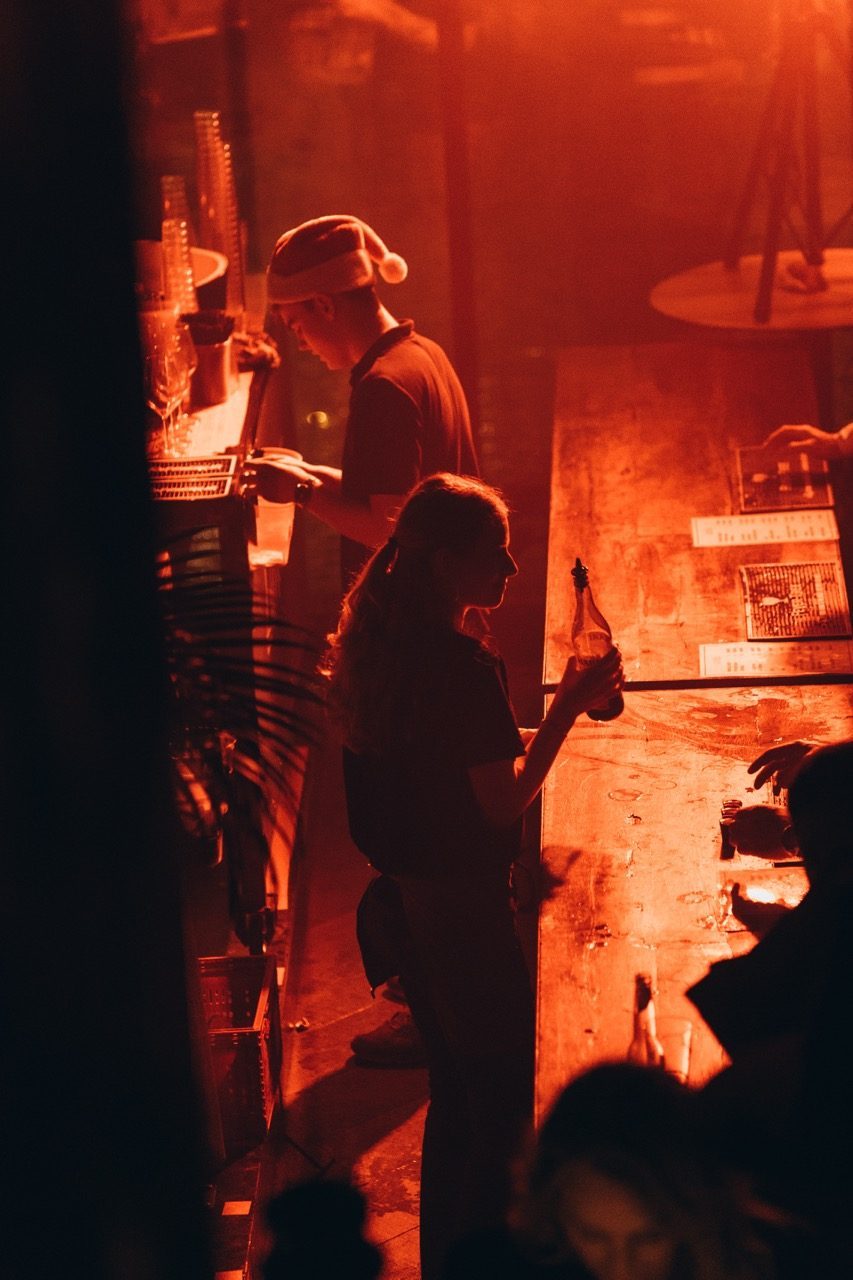
SINGLZ events are structured as singles club nights held at venues in major cities, with a DJ, music, and a social atmosphere. There are no fixed rounds, no assigned interactions, and no formal agenda. The format is intentionally unstructured to allow organic social dynamics to develop across the evening.
Structured formats where attendees are paired off for timed interactions — impose a conversational rhythm that does not reflect how connection naturally develops. When an exchange is time-limited, both parties are aware of the clock, which alters behaviour and reduces authenticity. An unstructured format allows conversations to develop at their own pace, end when they should, and resume later if appropriate. It also removes the social pressure of performing within a visible structure, which many attendees find inhibiting rather than helpful.
Exchanging contact details is most natural when a conversation has already developed some depth and both parties have shown continued engagement. Asking early in a first exchange can feel premature and put unnecessary pressure on the interaction.
Mutual engagement is indicated by reciprocal questions, sustained eye contact, and a conversation that has continued past the initial exchange without either party showing signs of wanting to close it. These signals suggest that offering to stay in contact would be well-received.
If a conversation has reached a natural endpoint and the exchange has been positive, offering to exchange details at that closing point is socially clean. It does not require the conversation to continue indefinitely in order to make the offer appropriate.
If someone declines to share contact details, that should be accepted without comment or follow-up. The event environment depends on all attendees feeling that their limits are respected. Repeated requests are not appropriate responses.
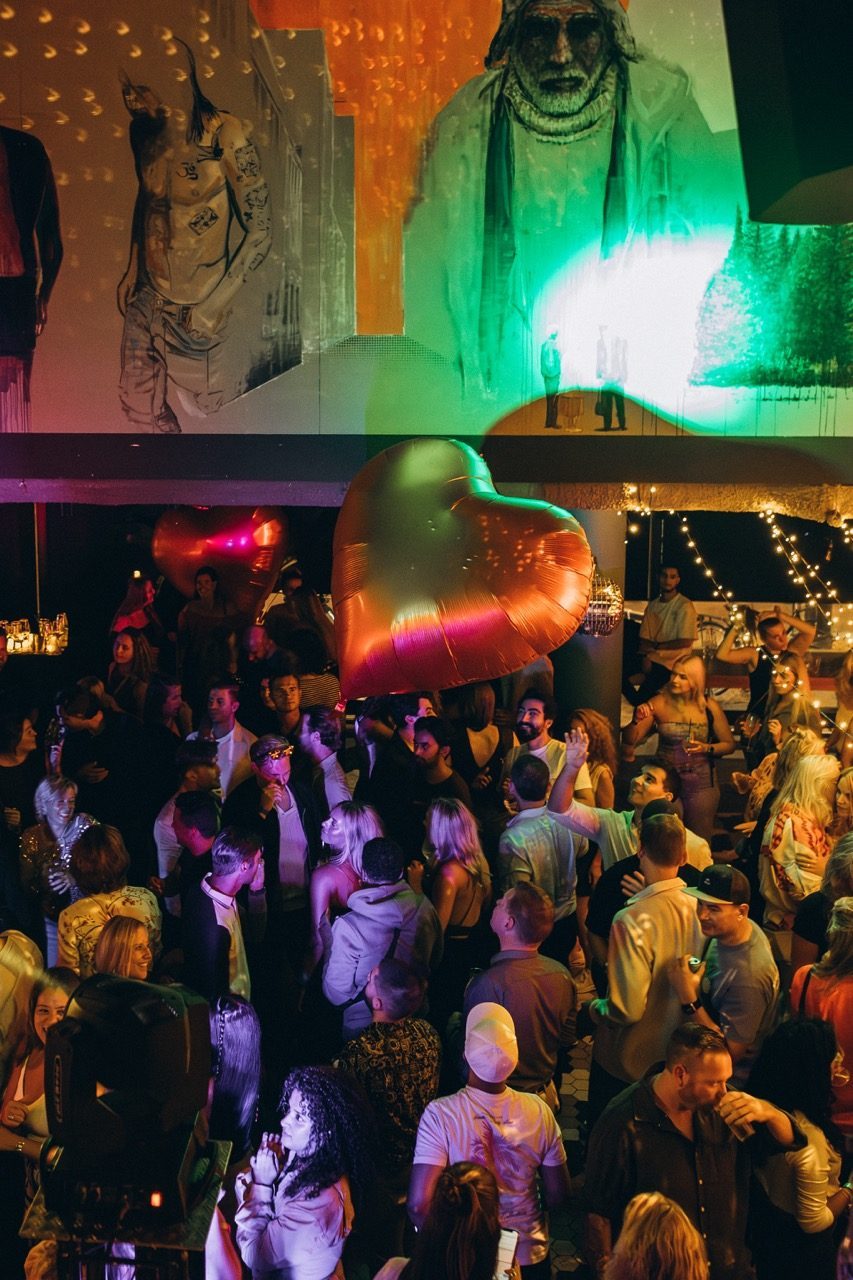
Not connecting with someone specific is entirely normal at any social event. The format does not require you to "succeed" in any measurable way there are no rounds, no visible scores, and no one tracking your interactions. Most attendees are in a similar position. The evening functions like a regular night out, which means you can simply enjoy the atmosphere without any pressure to perform.
Every ticket is purchased individually under an explicitly stated condition that the attendee is single. While this cannot be verified with certainty, it is clearly communicated as the core rule of the event. The nature of the ticketing process and the event's positioning means that the overwhelming majority of attendees are there with that shared understanding. It is a reasonable, if imperfect, social contract.
Ticket sales are actively monitored across three age brackets: 18–30, 30–45, and 45+. The aim is to maintain a balanced mix across all categories. All age groups share the same venue, so you are unlikely to feel out of place. Arriving earlier in the evening tends to give a clearer picture of the overall demographic before the crowd builds.
Both the event team and venue security are present throughout the evening and can be approached directly. You do not need to intervene personally. Reporting the situation to staff is the appropriate step they are there specifically to handle this kind of concern. The event's conduct expectation is that all attendees respect personal limits, and reports are taken seriously.
The event runs until 1:00 AM, and social dynamics typically continue building well into the evening. Arriving later means the atmosphere is usually more relaxed and social clusters are already forming, which can actually make it easier to join conversations. The ticket tier reflects pricing only there is no meaningful difference in opportunity based on arrival time within the event window.
The venue layout varies by location, but singles club nights are generally designed with social movement in mind bar areas, seating zones, and common spaces alongside the dance floor. These areas naturally become conversation spots throughout the evening. The format is intentionally unstructured, so there is no single designated "meeting area." Moving through different parts of the venue is a practical way to encounter different people.
Not necessarily. Exchanging details is most natural when a conversation has developed genuine depth and mutual engagement is evident. Brief, pleasant exchanges do not always reach that point, and that is entirely normal. The decision to offer contact details or not depends on the specific interaction, not on a rule about timing. One event is rarely a complete picture of what the format offers.
Refunds are handled through the ticketing provider, Weeztixs. At purchase, attendees have the option to add ticket protection for €1.68, which allows refund requests to be processed directly through the ticketing company according to their policy. Without that protection, standard terms apply. It is worth reviewing the ticketing provider's policy at the point of purchase if flexibility is a concern.
A single follow-up message after a few days is generally considered reasonable social behaviour. Beyond that, it is worth accepting that not every connection develops further. The event creates an opportunity for initial contact what happens afterwards depends on both individuals. There is no event-specific protocol for post-event communication; standard social norms apply.
Events are held in major Dutch cities, so Dutch is the primary social language in the room. That said, urban SINGLZ events typically attract people comfortable switching to English, particularly in Amsterdam and other international cities. Language is worth considering if it is a significant concern, but it is unlikely to be a complete barrier in practice. Arriving with an easy opening line in either language helps.
